How to Save Money: 25 Practical Ways to Cut Expenses
Learn how to save money with 25 practical ways to reduce everyday expenses, control spending, build savings, and improve your financial habits.

Table of Contents
47 key sections
Key Takeaways
- Track your spending before trying to cut expenses.
- Create a realistic budget based on your actual income and spending habits.
- Cancel subscriptions and memberships you no longer use.
- Plan meals, shop with a list, and reduce food waste.
- Compare prices before making major purchases.
- Use a waiting period to control impulse buying.
- Reduce unnecessary convenience spending and recurring fees.
- Give your savings a specific purpose and review your progress each month.
You don't have to increase your income to save money; often, you can do so by first tracking where your money goes, identifying expenses that add little value, and then setting up simple systems that make saving easier.
What we want is to get rid of all the things that you enjoy. Instead, a sustainable method of saving money should enable you to cut down on unnecessary spending without abandoning the costs that are needed for your health, work, relationships, and standard of living.
A budget enables you to find out how much money you get, how it is spent, and whether or not you have some money remaining for saving or for achieving your financial goals. As Consumer.gov recommends, list your income and expenses, compare the two amounts, and use the results to adjust your future spending.
There are 2 ways to reduce expenses and save time.
Money Starts With Your Spending
Before you reduce your expenses, you must first clearly understand how much money you are currently spending.
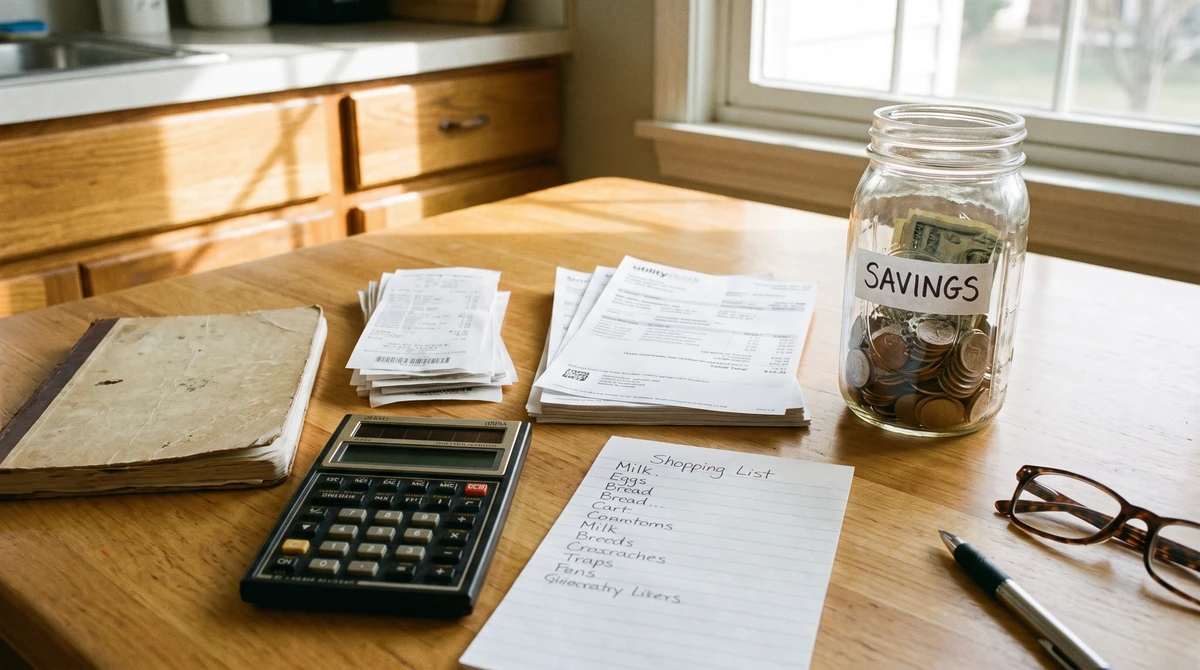
People tend to remember large purchases but overlook smaller, routine expenses. For instance, the amounts paid for subscriptions, meals eaten at restaurants, convenience purchases, service charges, and unexpected purchases can together account for a significant part of a monthly budget.
The first step is therefore simple:
Before you decide where to cut expenses, first find out where your money is going.
Review your bank statements, bills, receipts, digital payment records, and any other documents related to your spending, and include both regular and unusual expenses. The Consumer Financial Protection Bureau states that you should review records from several months to prevent accidentally leaving out any infrequent costs from your budget.
Once you understand your spending, divide expenses into three broad categories:
An essential list should cover housing, basic food, utilities, transportation, insurance, and all other necessary expenses.
Important but adjustable—things like entertainment, clothing, eating out, phone agreements, travel, and so on.
Optional: Items that are convenient or pleasant but not essential.
The fact that this classification is assigned does not mean that all optional expenses should disappear; it only gives you a clearer way of deciding how to allocate your money.
How to Find Money You Can Save
Look for expenses where you can make one of four changes:
Remove a cost that you no longer need.
Reduce the amount that you spend.
Replace the more expensive option with a less expensive one.
Don't buy something until you've thought about whether you actually need it.
Start with fixed costs, since eliminating one monthly bill can lead to repeated savings.
For example, if you save $20 a month on an ordinary expense, you'll save $240 over a year. The exact amount will vary by currency and individual circumstances, but the principle applies in all cases.
Now, let's look at 25 practical strategies.
25 Practical Ways to Save Money
1. Track Every Expense
Keep a record of all your expenses for at least a month.
Include:
Rent or housing payments
Groceries
Restaurants
Transportation
Utilities
Subscriptions
Shopping
Entertainment
Bank fees
Digital purchases
Small cash expenses
When you track your spending, don't pass judgment; your main goal should be accuracy.
Once you have the data, look for patterns; your biggest opportunity might not be one major expense but several smaller ones.
2. Make a Realistic Budget
A budget is just a plan concerning your money.
Start with your expected take-home income, then list your fixed bills, variable expenses, savings, debt payments, and occasional expenses.
Don't create a budget based on a fictional version of your life; use your real spending history.
Consumer.gov suggests creating a budget by writing down your income and expenses, subtracting expenses from income, and then regularly reviewing the results.
A realistic budget should answer three questions:
What must I pay?
What do I wish to spend?
What is my aim regarding saving?
3. Cancel Unused Subscriptions
Review every recurring subscription.
Review streaming services, apps, memberships, software, cloud storage, fitness services, newsletters, and other regular charges.
Ask:
Did I use it enough over the last month to make it worth paying for another month?
If the answer is no, consider canceling it.
Review your subscriptions every three or six months instead of waiting until they become a problem.
4. Compare Prices Before Major Purchases
When considering a costly purchase, look at several options.
Look at:
Total price
Warranty
Delivery costs
Maintenance
Expected lifespan
Return policy
Financing costs, if applicable
The lowest sticker price does not necessarily mean the lowest total cost.
When making important purchases, take the time to compare them rather than buying right away.
5. Make use of a shopping list.
A shopping list helps you tell the difference between what you planned to buy and what you buy on impulse.
Before you go shopping, make a list of the things you really need.
Unless there's a valid reason, buy only the items on the list.
This is especially effective for groceries and household items.
6. Plan Your Meals
You can often cut back on food spending without giving up either nutritional value or the pleasure it brings.
Before you go shopping, plan out several meals and first see what you already have at home.
Draw up your grocery list based on those meals.
Meal planning can also reduce food waste because you buy groceries with a specific purpose rather than purchasing ingredients that may never be used.
7. Try to cook at home more frequently.
Restaurant meals, delivery charges, ready-to-eat foods, and drinks bought outside the house can add up quickly.
You do not need to give up eating out entirely.
Why then, set a sensible limit.
For instance, you might prepare most of your weekday meals at home and go to restaurants only on special occasions.
The best system is the one you can maintain.
8. Reduce Food Waste
If you are going to buy more food, check your refrigerator, freezer, and pantry.
Use older ingredients first.
Freeze foods you can't eat soon.
Store your food properly, and note the expiration date and quality information.
Reducing waste means getting more value from the groceries you have already paid for.
9. It is appropriate to buy generic or store-brand products.
With a less expensive alternative, you might get what you need for ordinary products.
Don't assume a well-known brand is automatically better; compare ingredients, specifications, quantities, quality, and performance.
This is especially effective for simple household items and some pantry essentials.
Don't compromise safety or quality to save a little.
10. Reduce Convenience Spending
Convenience has a price.
Examples include:
Delivery fees
Last-minute transportation
Pre-prepared food
Rush shipping
Frequent takeaway drinks
Paying someone to perform simple tasks you can reasonably do yourself.
You do not have to give up convenience completely.
Instead, look at the convenience expenses you hardly notice, then choose which ones you want to keep.
11. Check your phone and internet plans
Communication service plans can become costly if you don't review them for years.
Check:
Your current usage
Data limits
Unused features
Additional lines
Equipment fees
Promotional pricing
Available lower-cost plans
Your current plan may no longer suit you if your needs have changed.
12. Reduce waste of energy and utilities
Look for simple ways to reduce unnecessary use of household resources.
Depending on your home and location, consider:
Turning off unused lights
Unplugging equipment that consumes unnecessary standby power
Using efficient lighting
Adjusting heating or cooling settings sensibly
Maintaining appliances
Fixing leaks
Washing full loads when practical
Savings will vary by home type, utility costs, climate, and your habits, so focus on reducing waste rather than calculating a precise savings figure.
13. Use Public Transportation, Walking, or Carpooling When Practical
Transportation can make up a major portion of a household's budget.
When practical, consider alternatives such as:
Walking
Cycling
Public transportation
Carpooling
Combining multiple errands into one trip
Working remotely when your employer permits it
The decision you make should be based on how far away something is, how safe it is, whether it's available, how much time you have, and your own personal situation.
14. Keep the things that you currently own
Preventive maintenance can help you get more out of expensive purchases.
Take care of:
Vehicles
Appliances
Electronics
Clothing
Furniture
Tools
Home equipment
Maintenance doesn't eliminate unexpected costs. However, ignoring regular care can cause repairs you could have avoided or make you replace things sooner.
15. Apply a Waiting Rule to nonessential purchases.
Impulse buying usually happens because there is no time gap between wanting an item and buying it.
Create a waiting period.
For small purchases, you could wait until the following day.
For expensive purchases, you might want to wait a few days or longer.
During the waiting period, ask:
Do I need this?
Do I already have something that performs the same function?
Shall I still want it next week?
Can I afford it?
What else could that money be put to?
16. Cancel reception of marketing emails and notifications
Constant exposure to promotions can encourage unnecessary purchases.
Unsubscribe from retailers you rarely shop with.
Turn off shopping notifications you don't need.
You can also remove saved payment details from retailers if doing so creates an intentional pause before buying.
The goal isn't to avoid every sale. It is to make purchasing a deliberate decision rather than an automatic reaction.
17. Use What You Already Own
Before buying something new, look around your home.
You may already have:
Clothing you rarely wear
Unused kitchen equipment
Books you have not read
Tools
Furniture
Exercise equipment
Electronic accessories
Cleaning products
Creating a “use what you have” period can reveal how much you can accomplish without buying anything new.
18. Buy Used When It Makes Sense
Second-hand items can offer great value.
Consider used options for items where condition can be easily evaluated, such as:
Furniture
Books
Certain tools
Some electronics
Clothing
Sports equipment
Before you buy, check the condition, authenticity (where appropriate), safety, warranties, and the return policy.
When safety is a critical consideration, follow the relevant safety instructions and do not choose a lower price over safety.
19. Lower the fees charged by banks and for payments.
Check your account statements for fees you can avoid.
Potential examples include:
ATM fees
Overdraft charges
Account maintenance fees
Foreign transaction fees
Transfer fees
Late payment charges
You may be able to avoid some fees by choosing different account options or improving your payment timing.
If you often pay your bills late, check your cash flow and due dates rather than treating fees as something you accept.
20. Check your insurance coverage.
Insurance is meant to protect you against major risks, since your circumstances can change over time.
You should regularly review your policies and, when appropriate, compare the available options.
Check whether:
Your coverage still matches your needs.
You are paying for unnecessary features.
Your personal circumstances have changed.
You qualify for any available discounts.
Another provider offers comparable coverage at a different price.
You must not reduce your substantial coverage to save money unless you first consider the possible consequences.
21. Pay your bills on time.
You might end up paying extra if you fail to make payments on time.
Use reminders or set up automatic payments when appropriate and when you can ensure enough funds remain in the account.
If it's a cash-flow issue, organize your bills by due date and by when your paycheque arrives.
The CFPB states that people can create a more realistic working budget by keeping on top of when their bills are due and by monitoring their cash flow.
22. Reduce High-Cost Debt
Purchases may become considerably more expensive over time due to interest.
If you have any debt with high costs, you should reconsider how you repay it and use any savings to pay off those expensive balances while maintaining an appropriate amount of cash reserves.
Consumer.gov advises that to deal with your debt, you should first prepare a budget so you understand your income and spending.
Be cautious about taking on new debt merely to simplify your current payments. Before agreeing to a new financial product, make sure you fully understand the interest rate, fees, repayment period, and total cost.
23. Automate Your Savings
By the end of the month, it can be difficult to save what remains because there may be nothing left.
Why not treat your savings as a planned element of your budget?
You can set up an automatic transfer from a transaction account to a savings account if your financial institution offers that feature.
The CFPB sees automatic transfers as one way to make saving more consistent.
A small, regular sum will help you build the habit.
24. Start an Emergency Fund
Even with a carefully planned budget, unexpected expenses can still throw it off.
An emergency fund consists of money saved to cover unexpected expenses like repairs, medical bills, or a sudden loss of income. The amount you need depends on the household and its circumstances.
Instead of aiming solely at a large final target, begin with an amount that you could realistically save.
Then build it gradually.
Separate your emergency savings from ordinary spending so that you won't be tempted to use it on normal purchases.
25. Assign a purpose to each saving.
It is easier to save when you know the money is being set aside for a particular purpose.
Instead of simply saying:
I need to save more money.
Create specific goals such as:
Emergency expenses
Education
A future vehicle
A home purchase
Travel
Annual bills
Business expenses
Retirement
A major personal goal
Having a specific aim provides you with a reason to keep your savings when you are tempted to spend it.
The CFPB also suggests setting specific savings goals and making saving a regular habit.
How to Build a Simple Money-Saving System
Knowing 25 different ways to save money is useful, but trying to make all the changes at once can be overwhelming.
A more effective approach is to build a simple system.
Step 1: Track your spending
Spend one month recording your expenses.
There's no need to worry about being perfect; what you should aim for is accuracy.
Step 2: Find your three biggest opportunities
Find three places where you can genuinely cut back on your spending.
For example:
Eating out
Unused subscriptions
Impulse shopping
Start there.
Step 3: Set a savings target
Choose an amount that fits your situation.
It's better to build a sustainable savings habit than to set an unrealistic target you give up after a few weeks.
Step 4: Automate the habit
If your bank or financial organization offers automatic transfers, plan your savings around your income cycle.
Step 5: Review your budget monthly
A budget isn't something you draw up once and then ignore.
Your income, bills, goals, and spending habits may all change.
Consumer.gov suggests drawing up a budget each month and comparing the amount you plan to spend with the amount you actually spend.
Step 6: Increase savings when circumstances improve
If you see your income go up or find that one of your expenses has vanished, then think about putting some of that difference into savings rather than simply increasing your spending.
This can help prevent lifestyle creep from taking every increase in income.
Common Money-Saving Mistakes to Avoid
Cutting Everything You Enjoy
It might be hard to keep a budget that eliminates all enjoyable activities.
Instead, choose the expenses that matter to you and cut back on those that offer less value.
Focusing Only on Small Expenses
While small purchases matter, larger recurring expenses can have a bigger impact.
Together with your daily spending, check your housing, transportation, insurance, debt, subscriptions, and other regular expenses.
Creating an Unrealistic Budget
A budget that assumes you will never eat outside, never buy clothes, never go to events, or never spend money unexpectedly may not match real life.
Include sensible categories for irregular and optional expenses.
Treating Savings as Whatever Is Left Over
If you recognize the importance of saving, give it a specific place in your financial plan.
The CFPB states that you can incorporate savings into a budget rather than treating it as leftover money.
Using Debt to Maintain a Lifestyle
A smaller monthly payment does not necessarily mean a lower total cost.
Before making a purchase, look at the total amount to be repaid, the interest and fees, and the impact of the payment on your future cash flow.
Chasing Every Deal
You wouldn't consider it a saving if you had no intention of buying the product anyway.
The best item to buy is usually the one you really need at a sensible total cost.
How to Save Money on a Low Income
It can be particularly hard to save when a large part of your income already goes to necessary expenses.
If the situation is as described, do not think that reducing minor expenditures will deal with all of your financial problems.
Start with the basics:
Track all income and necessary expenses.
Find the bills that are negotiable or can be adjusted.
Review recurring subscriptions and fees.
Reduce food waste.
Plan purchases.
If you have difficulty making payments, contact your creditors or service providers.
Avoid unnecessary new debt.
Whenever possible, save small amounts.
If you can't increase your income, then look for methods to reduce your expenses.
Gradually create an emergency reserve.
The CFPB stresses that people with limited capacity to save should still start by setting aside what they can afford, understanding that the right savings strategy will vary by individual circumstances.
The only way out may be more than simply making a budget if your basic expenses regularly exceed your income. You may need to look at housing, transport, debt, income, or another fundamental cost.
A Simple Monthly Money-Saving Checklist
Use this checklist at the beginning or end of each month:
Review total income.
Review your bank and payment statements.
Record major expenses.
Check recurring subscriptions.
Review upcoming bills.
Plan groceries and meals.
Check for unnecessary fees.
Review debt payments.
Transfer planned savings.
Check emergency savings.
Pick one cost to cut next month.
Review your progress toward your financial goals.
The goal is consistency, not perfection.
Frequently Asked Questions
1. What is the easiest way to start saving money?
A good place to start is tracking your spending and spotting one or two items you could reasonably cut back on. Then redirect the money you save toward a specific savings goal.
2. What are some ways of saving money each month?
Make a monthly budget, work out which expenses are essential and which are discretionary, decide on a realistic savings amount, and set up automatic transfers if your bank offers this facility. Each month, check your actual spending and make any necessary adjustments to your budget.
3. How much money ought I to save each month?
There isn't a one-size-fits-all figure for everyone; the right amount to save depends on your income, essential expenses, debt level, current savings, financial goals, and household situation. Start with a sum you can keep up consistently.
4. What steps can I take to save money and not feel deprived?
It is better to cut back on expenses that offer little value than to get rid of everything you enjoy. Keep the activities that matter most to you, and look for cheaper options for less important spending.
5. Should I prioritize paying off my debt or saving money?
The answer depends on the type and cost of your debt, your emergency savings, and your overall financial situation. A budget can show how much cash you have for both priorities. High-cost debt deserves particular attention because interest can increase the total cost of borrowing.
6. How can I save money on groceries?
Plan meals, check your pantry before shopping, create a list, compare prices, use food you already have, reduce waste, and consider lower-cost alternatives when quality and nutritional needs remain appropriate.
7. How do I stop impulse spending?
Create a waiting period before nonessential purchases. Remove shopping notifications, unsubscribe from promotional emails, use a shopping list, and ask whether the purchase fits your budget and current priorities.
8. Is it worth automating savings?
Automatic savings can make saving more consistent because money transfers on a schedule instead of relying entirely on willpower. The CFPB specifically discusses automatic transfers as a practical savings strategy.
Conclusion
Learning how to save money is less about finding one perfect trick and more about creating a system that consistently directs your money toward your priorities.
Start by tracking your spending. Create a realistic budget. Review recurring expenses. Reduce waste. Plan purchases. Control impulse spending. Then make saving a regular part of your financial routine.
You do not need to make all 25 changes at once.
Choose two or three strategies that fit your lifestyle, apply them consistently, and review your progress each month. Once those habits become normal, look for the next opportunity to reduce unnecessary expenses.
Most importantly, remember that saving money should have a purpose. Whether you are building an emergency fund, paying down expensive debt, preparing for a major purchase, or working toward a long-term financial goal, a clear purpose can make it easier to stay consistent.
Small, repeatable decisions can create a stronger financial system over time.
Admin
Finance writer and investment analyst at FinFlexa, helping readers make smarter money decisions with data-backed guides and calculators.